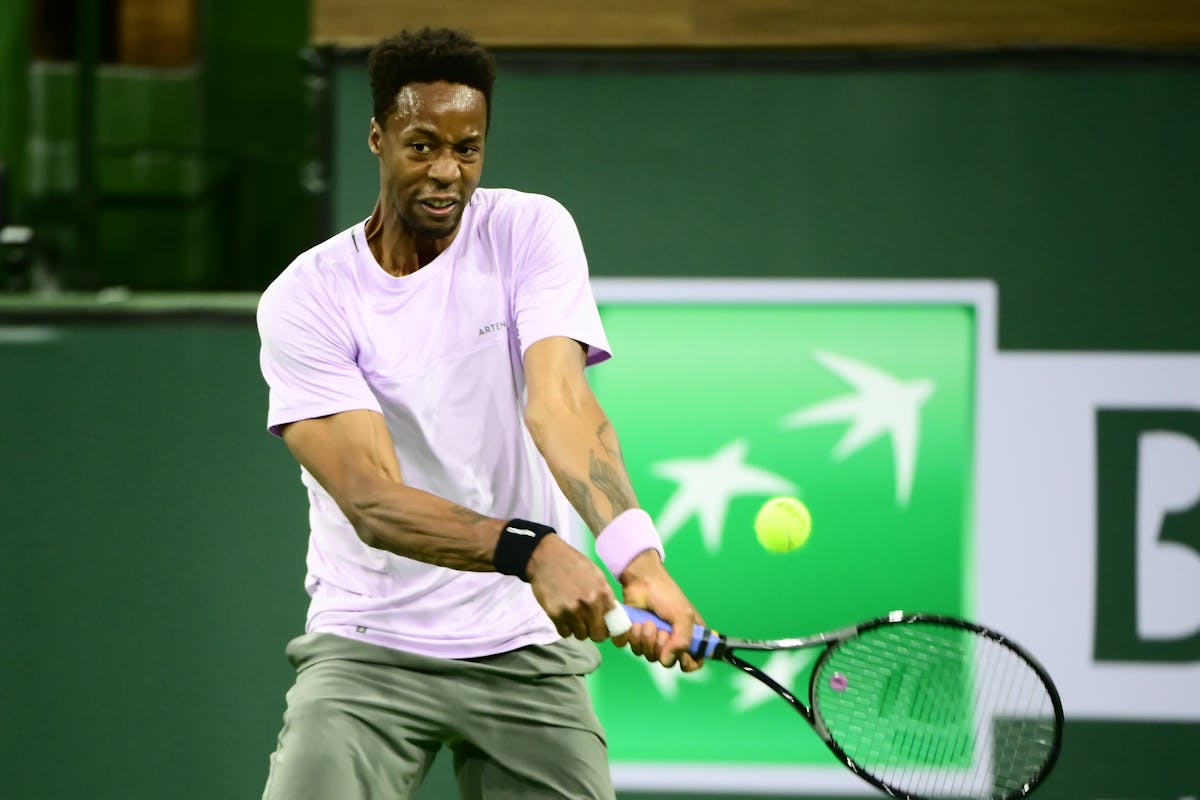
Monfils 2026 Wild Card: Deconstructing the Current Context's Gaps
The mere mention of a "Monfils 2026 wild card" immediately sparks curiosity among tennis enthusiasts. Gaël Monfils, known affectionately as "La Monf," is a charismatic and electrifying presence on the ATP Tour, whose career has spanned well over two decades. The idea of him still competing at a high level and potentially requiring a wild card in 2026, when he would be approaching 40, raises intriguing questions about career longevity, enduring appeal, and the intricate mechanics of professional tennis. However, for those actively seeking concrete details about a prospective Monfils 2026 wild card, the current information landscape presents a significant challenge. What the present context truly lacks is not just an answer, but the very foundation upon which such an answer could be built. This article delves into why definitive information remains elusive, explores the multitude of factors that would influence such a decision, and offers insights into how fans and media can approach this fascinating, albeit speculative, topic.The Elusive Nature of Future Sports Predictions: Why "Monfils 2026 Wild Card" Lacks Data
In the fast-paced world of professional sports, predicting events even a few months out can be challenging, let alone making definitive statements about a player's status two years in advance. The concept of a Monfils 2026 wild card falls squarely into this category of premature speculation for several fundamental reasons:- Dynamic Player Trajectories: A tennis player's career, particularly that of a veteran like Gaël Monfils, is subject to constant flux. Performance levels, injury status, personal commitments, and even motivational factors can change dramatically over time. Any firm prediction about his need for or receipt of a wild card in 2026 would ignore these inherent uncertainties.
- Tournament-Specific Decisions: Wild cards are typically awarded by individual tournaments (Grand Slams, ATP Masters 1000, etc.) much closer to their event dates. These decisions are contingent on a player's then-current ranking, recent form, injury history, local interest, and often, the political and commercial considerations of the tournament organizers. There is simply no mechanism for a tournament to pre-allocate a wild card years in advance.
- Absence of Official Announcements: Major tennis organizations (ATP, ITF, Grand Slam committees) do not issue long-range forecasts or commitments regarding player entries, especially for non-automatic entries like wild cards. Their focus is on the immediate schedule and current rankings.
- The Speculative Nature of Early Reporting: Without official sources, any current "information" regarding a Monfils 2026 wild card details would be purely speculative, based on rumor, or misinterpretation. Responsible sports journalism prioritizes verified facts, and in this instance, those facts simply don't exist yet.
The lack of concrete data isn't a failure of information gathering; it's a reflection of how sports events are planned and how player careers naturally unfold. We are simply too far out to have any meaningful, verifiable context.
Factors Influencing a Veteran's Wild Card Bid in 2026
While direct information about a Monfils 2026 wild card is absent, we can analyze the criteria that would typically come into play if Monfils were to seek such an entry. Understanding these factors provides valuable context to the ongoing speculation.Gaël Monfils' Enduring Legacy and Appeal
One of Monfils' strongest assets is his immense popularity and the entertainment value he brings to the court. Even in his late career, he remains a significant draw for fans and broadcasters. His acrobatic style, showmanship, and emotional connection with the crowd are unparalleled. A tournament director considering a wild card for Monfils in 2026 would weigh:
- Crowd Engagement: Does he still pack stadiums and generate buzz?
- Media Interest: Does his presence attract significant media coverage?
- Sponsorship Value: Is he still a marketable figure who can enhance the tournament's brand?
- Contribution to the Sport: His long and distinguished career, and his role as a former top-10 player, certainly add to his legacy argument.
These intangible factors often play a crucial role for beloved veterans who might not meet strict ranking cut-offs but offer undeniable value.
Physical Condition and Performance Trajectory
By 2026, Monfils would be 39-40 years old, an age where very few tennis players are still competing at the elite level. His physical condition would be paramount:
- Injury History: Monfils has had a career punctuated by various injuries. His ability to stay fit and compete consistently in the lead-up to 2026 would be a major determinant.
- Current Ranking & Form: While wild cards are for those outside the main draw, a player who is still ranked within the top 100-200, even if not high enough for direct entry, presents a much stronger case than someone who has completely fallen off the tour. Sustained good form, even if not winning titles, would be crucial.
- Desire to Compete: Ultimately, Monfils' own desire and motivation to continue grinding on the tour would dictate his availability for a wild card. Many players opt for retirement before reaching this age.
The Mechanics of Wild Card Selection
Tournament organizers follow certain guidelines, though discretion is often key. Typical considerations include:
- National Quotas: Many tournaments reserve wild cards for local players to promote national talent.
- Past Champions/Finalists: Often, former champions or finalists of a specific event, if still active and able to compete, are strong candidates.
- Special Circumstances: Returning from a long-term injury, or a farewell appearance, can sometimes merit a wild card.
- Reciprocity Agreements: Sometimes wild cards are exchanged between tournaments, particularly within the same tour.
For Monfils, it would likely be a combination of his legacy, potential performance, and sheer entertainment factor that would sway decision-makers, assuming he is still actively competing and seeking entries in 2026.
Navigating the Information Void: Tips for Fans and Media
Given the lack of current factual information regarding a Monfils 2026 wild card, both fans and media must adopt a sensible approach to discussing such future possibilities.- Embrace Speculation Responsibly: It's natural to speculate about the future of a beloved athlete. However, it's crucial to frame these discussions as hypothetical scenarios rather than impending announcements. Enjoy the "what if" without creating false expectations.
- Follow Official Channels for Updates: For any concrete information regarding player entries or wild cards, always refer to the official websites of the ATP Tour, the specific Grand Slams (Australian Open, Roland Garros, Wimbledon, US Open), and individual tournament sites. These are the sole authoritative sources.
- Monitor Player Statements: Keep an eye on Gaël Monfils' own interviews, social media, and press conferences. His personal outlook on his career longevity will be the most telling indicator of his intentions for 2026 and beyond.
- Understand the Sport's Lifecycle: Recognize that significant decisions like wild card allocations are typically made mere weeks or months before an event, not years. Patience is key.
- Critical Media Consumption: Be wary of any early reports claiming definitive knowledge about future wild cards. Reputable sports journalism will clearly distinguish between confirmed news, informed analysis, and pure speculation.
By following these guidelines, you can ensure that your engagement with topics like a Monfils 2026 wild card beyond the current data scope remains both enjoyable and factually grounded when the time comes.
The Broader Conversation: Longevity and Impact in Modern Tennis
The discussion around a potential Monfils 2026 wild card transcends just one player; it speaks to a broader trend in modern tennis. We are witnessing an era where athletes are extending their careers further than ever before, thanks to advancements in sports science, training, and recovery. Players like Roger Federer, Serena Williams, Rafael Nadal, and Novak Djokovic have redefined career longevity. Gaël Monfils, with his physically demanding style, is another testament to this phenomenon. The idea of him still competing at nearly 40 highlights:- The evolving understanding of peak performance age in tennis.
- The enduring appeal and market value of veteran players.
- The importance of adapting one's game and training regimen to combat the effects of age and injury.
These veterans often serve as inspiring figures for younger players and provide a vital link to the sport's history, enriching the fan experience by showcasing dedication and passion over an extended period.
In conclusion, while the search for concrete details regarding a Monfils 2026 wild card will, for now, come up empty, this very lack of information prompts a deeper and more meaningful discussion. It allows us to explore the intricate criteria for wild card selection, appreciate the unique blend of skill and showmanship that Gaël Monfils embodies, and consider the impressive trend of career longevity in contemporary tennis. As fans, our best approach is to enjoy his current performances, monitor his career trajectory, and patiently await future announcements from official sources. The possibility, however remote, is enough to keep the spirit of "La Monf" alive in the tennis world for years to come.